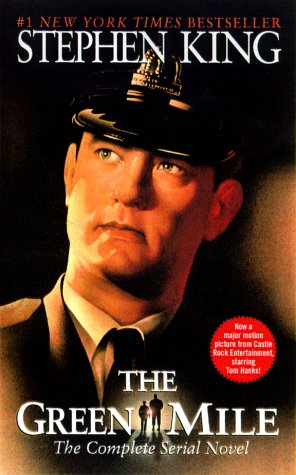
I've had this sort of on my radar for awhile. Cos I like King's writing, even when it's non-fiction. I was hoping this would be sort of like King's nonfiction On Writing, which is excellent. I'm a fan of horror fiction. Obviously. Even the history and study of. One of my fav classes in college was "Horror Fiction" (fittingly enough). So I figured this would be right up my alley.
Maybe it could have been if it wasn't published in the early '80s, with a focus on horror fiction over the last 30 years. Or maybe if I read this when it was first published and was familiar with all of the movies and TV shows he talked about. When I knew the movie or the book, things were good. When I didn't, (and this was often) it was boring. It started to feel like a slog and I thought about stopping a few times but by then I was so far through it I was pretty much like "Dammit, my stats aren't taking a hit cos of this."
If you are a big fan of horror movies and TV shows and books from the '50s through the '80s this might be just the thing for you. And he talks about some of the more classic writers in the horror and suspense genre (with Wilkie Collins getting a shout-out). I liked those parts, when he's discussing Frankenstein and the like. Or when he was talking about horror fiction in a more general sense, instead of discussing a specific piece of media. But so much of the time I just didn't care.
I guess I could talk more about what he wrote about, how he split up the book, but honestly, I don't want to. I don't remember a lot of the book. As I already said, if you're a big fan of horror movies especially (I feel like we spent a lot of time there) you'd probably like this. Of course if you're that big of a fan of horror stuff from this time period, it's also likely you already know about this. He provides lots of recommendations (included 100 books and 100 movies listed out in a couple appendixes) and there's a little of everything there. The book shows its age a bit, not just in the focus, but in comments that are...less than enlightened and things I would hope King doesn't think any more.
Or if you want King nonfiction, maybe just read On Writing again, because that's a really great book.
Gif rating:
King, Stephen. Danse Macabre. Pocket Books, 2011. Kindle. Originally published 1987.
Showing posts with label Stephen King. Show all posts
Monday, January 30, 2017
Danse Macabre: Why do people want to be horrified?
Posted by
Red
at
9:00 AM
Danse Macabre: Why do people want to be horrified?
2017-01-30T09:00:00-05:00
Red
Danse Macabre|Stephen King|
Comments
Labels:
Danse Macabre,
Stephen King
Wednesday, July 13, 2016
No summer is endless
You know who I haven't read in awhile? Stephen King. Well, I guess I actually re-read one of his books last year (Misery), but I've read that one a few times over the years it feels like it's been even longer. But anyway, so it's been awhile since I've read King and Joyland was on sale one day so I decided why not. King's another go-to author (along with Bill Bryson, Mary Roach, Jasper Fforde, Chuck Wendig) where I'm confident I'm going to like what they write so I don't worry too much about details like "What is this about?" I saw the cover and it looked pulp-y (as in fiction, not tree mash) and there was an amusement park and you know what? Good enough for me.
I brought this book with me on a long weekend up to Boston. I didn't really think I'd have much time to read while up there since we spent pretty much every moment visiting friends still up there and eating all the food we've missed since moving (oh and seeing my friend get married! hence the trip) and yet somehow, any moment I had free, I was pulling the book out to just get a few more pages in.
Joyland isn't horror, which I was sort of confused about at first cos, you know, King. It is a "mystery, crime novel" according to Wikipedia but even that doesn't entirely seem accurate.
It feels like most of the novel is setting. A lot of the time is about the main character Devin, who's having girl problems back home, spend his summer working at a carnival back in the '70s. This is one of those rickety seaside amusement parks, very different from the Disneys or Six Flags of today. Devin learns the ropes and the lingo and the ins-and-outs of this world. And Devin finds himself fitting in here, with a special gift for entertaining the kids while "wearing the fur" (dressed up in one of those fursuits).
This is King, so of course there's a murder. Or rather, there's the ghost of a woman who, years ago, was murdered in the haunted house ride. The murder was never solved, so Devin and a few other people in his group decide they want to try to solve the murder.
And there's ALSO a strange little boy in a wheelchair that Devin sees on his way to and from Joyland, sitting outside a big house with his mother and dog. The boy is friendly but the mother seems standoffish. Devin seems drawn to this trio.
The book seems to meander, and even the whole murder mystery doesn't come up into we're well into the story. But that's fine. The fact that there isn't really much of a plot for a lot of the book is sort of the point. Or is at least intentional. It was a world I wanted to come back to. It's a light, quick read, it gets suspenseful towards the end, overall entertaining even if it doesn't stick with you.
Gif rating:
Title quote from location 2498
King, Stephen. Joyland. Hard Case Crime, 2014. Kindle
I brought this book with me on a long weekend up to Boston. I didn't really think I'd have much time to read while up there since we spent pretty much every moment visiting friends still up there and eating all the food we've missed since moving (oh and seeing my friend get married! hence the trip) and yet somehow, any moment I had free, I was pulling the book out to just get a few more pages in.
Joyland isn't horror, which I was sort of confused about at first cos, you know, King. It is a "mystery, crime novel" according to Wikipedia but even that doesn't entirely seem accurate.
It feels like most of the novel is setting. A lot of the time is about the main character Devin, who's having girl problems back home, spend his summer working at a carnival back in the '70s. This is one of those rickety seaside amusement parks, very different from the Disneys or Six Flags of today. Devin learns the ropes and the lingo and the ins-and-outs of this world. And Devin finds himself fitting in here, with a special gift for entertaining the kids while "wearing the fur" (dressed up in one of those fursuits).
This is King, so of course there's a murder. Or rather, there's the ghost of a woman who, years ago, was murdered in the haunted house ride. The murder was never solved, so Devin and a few other people in his group decide they want to try to solve the murder.
And there's ALSO a strange little boy in a wheelchair that Devin sees on his way to and from Joyland, sitting outside a big house with his mother and dog. The boy is friendly but the mother seems standoffish. Devin seems drawn to this trio.
The book seems to meander, and even the whole murder mystery doesn't come up into we're well into the story. But that's fine. The fact that there isn't really much of a plot for a lot of the book is sort of the point. Or is at least intentional. It was a world I wanted to come back to. It's a light, quick read, it gets suspenseful towards the end, overall entertaining even if it doesn't stick with you.
Gif rating:
Title quote from location 2498
King, Stephen. Joyland. Hard Case Crime, 2014. Kindle
Posted by
Red
at
8:44 AM
No summer is endless
2016-07-13T08:44:00-04:00
Red
Joyland|Stephen King|
Comments
Labels:
Joyland,
Stephen King
Monday, November 2, 2015
Is the radio play dead?
Writing radio plays, it seems to me, is a lost art.
Stephen King says that in his intro to the collection of short stories Everything's Eventual. He talks about how he was trying to write a radio play, something along the lines of of Orson Welles' treatment of H.G. Wells War of the Worlds, starting the play as fake news announcements. But he couldn't do it. It was reading more like an audiobook. Which is what lead him to make the above comment. Or in full:
Writing radio plays, it seems to me, is a lost art. We have lost the ability to see with our ears, although we had it once. I remember listening to some radio Foley guy tapping a hollow block of wood with his knuckles...and seeing Matt Dillon walking to the bar of the Long Branch Saloon in his dusty boots, clear as day. No more. Those days are gone.It seems true. The only time I listen to the radio is the few times I'm in the car (I train it to work and try to walk as much as possible rather than take the car out) and then I tend to listen to music.
So radio no, but I do listen to some podcasts. Serial. Freakonomics. Welcome to Night Vale. Night Vale is probably the closest to a radio play, the type King is talking about, but it still isn't quite the same.
But then I found something that is like King's lost radio play. And oddly enough, it came from his son, Joe Hill.
Kayleigh over at Nylon Admiral posted about how Hill's Locke & Key was currently available as an audiobook for free. For those who don't know, L&K is a graphic novel, so my first reaction to a GRAPHIC novel being made into an audiobook was a confused Britney
but I went with it cos I like free. And it's treated like an audioplay. There are multiple actors playing the different parts. There are sound effects. We're not hearing them tell a story, like the World War Z audiobook does. The characters aren't narrating. It is what I imagine King's radio plays were.
When I first read the Everything's Eventual intro, I was thinking that King is probably right, that the radio play is dead because who's going to sit around listening to the radio again? I'm glad I was wrong.
And seriously, go download Locke & Key because it is FREE until November 4th so you have a few more days.
Posted by
Red
at
9:00 AM
Is the radio play dead?
2015-11-02T09:00:00-05:00
Red
Everything's Eventual|Joe Hill|Locke & Key|Stephen King|
Comments
Labels:
Everything's Eventual,
Joe Hill,
Locke & Key,
Stephen King
Wednesday, January 7, 2015
I am in trouble here. This woman is not right
Continuing my current trend of reviewing horror stories in December/January because I am unable to review things in a reasonable amount of time, I now come to Stephen King's Misery.
This is at least the third time I've read this book. I was introduced to it in a college class, The Modern Bestseller, and I've loved it since then. Which was good cos it was one of the few books I did enjoy from that class (Lovely Bones, shut up, you're terrible). This won't be a gushing review, but I've read it multiple times so it's certainly not going to be a negative review.
For those of you unfamiliar with the story, Paul Sheldon is a writer who has just finished what he believes to be his best book, a long cry from his romantic Misery series he can't wait to get away from. He celebrates finishing his book with a couple bottles of champagne and then decides to drive to L.A. because drunk people make GREAT decisions. He gets caught in a snowstorm and predictably crashes his car. Unpredictably, he's found by a "good samaritan" who just happens to be his Number One Fan. Lucky Paul.
Annie Wilkes is also a former nurse so she brings Paul back to her home to take care of his badly broken legs. Good thing Annie has a stockpile of medication, including novril, an addictive pain killer. And of course, Annie loooooves Paul's Misery Chastain series. It's too bad Paul killed off Misery in his last book. But Annie now has her own pet writer to right the wrongs Paul created.
This book is seriously scary. Annie Wilkes is among the best villains I have encountered. She's delusional and unpredictable, she's not clever, but she's also not stupid and it's dangerous to underestimate her. Paul is dependent on Annie, particularly Annie's stash of novril. And a little bit to the writing. Paul plays Scheherazade to both Annie and himself. He needs something to keep him going because things aren't looking great for him.
I like the fact that there's nothing supernatural happening here. It makes things that much scarier. It's a slim story. There are really only two characters the whole time: Paul and Annie. Almost all of the action takes place at Annie's secluded home. Even there, most of the action takes place in a single guest bedroom. You start to feel the isolation and claustrophobia Paul is going through. There's also the suspense. Paul is playing a game of "Can You?", not only to see if he can write the story Annie wants without cheating, but he's also playing for his life. Can he get away?
GIF rating:
King, Stephen. Misery. Signet, 1988.
Posted by
Red
at
9:00 AM
I am in trouble here. This woman is not right
2015-01-07T09:00:00-05:00
Red
Misery|Stephen King|
Comments
Labels:
Misery,
Stephen King
Friday, January 24, 2014
You guys want to go see a dead body?
My reading slump from December is continuing into January. Well, not so much slump as slog? I'm reading, just slower than normal. No reason. I'm enjoying the books I'm reading, so it's not like I struggling through these books. I'm just easily distracted and there's a lot of Sherlock to watch (and then re-watch).
The minithon helped me a bit with the reading (and a lot with the eating-mini-things and coming-up-with-mini-justifications) and after finishing up with Bryson's In A Sunburned Country I picked up Different Seasons by Stephen King. Laura got it for me for Christmas and since it's a collection of King novellas, it counted as mini. I mean, sort of mini. By King standards. By other author standards it's a bunch of novels. Figure the book is over 600 pages and there's only 4 stories in here. Not long novels, but still, you could call them novels and people wouldn't call you a liar.
You probably already know 3 of the stories. They've been made into movies, and that's not to say you only know them cos of their movie-ness, but you know...if you know them, it's likely because MOVIES. I've seen 2 out of the 3 movies, and know of the third, so I'll just assume you're all in the same boat as me.
Right, maybe I should get to the stories. And since this is 4 short novels, I'll give you a brief review of each.
So the first one is Rita Hayworth and the Shawshank Redemption, which was my favorite. The other stories are good but I almost wish this was the last story because it's hard for the other ones to compete. If you don't already know the story, how'd you manage that? Because I'm pretty sure that movie is playing on TV on some channel right now. Andy Dufresne is in Shawshank prison for the murder of his wife and her lover. Long-timer Red tells the story of Andy, who seems to confound the prisoners and guards alike. He has a confidence about him, even in these dark circumstances. There are no surprises going from the movie to the book. What you see on film is essentially what you get in the story, so good job, filmmakers. This isn't a horror story. There's nothing supernatural here, although there is some violence. I highly recommend this one. Probably one of King's bests.
I know I said that I wish this story came at the end because the other stories had a hell of an act to follow. But the other novellas did a good job. I mean, I still like Shawshank best, but the others are excellent in their own right.
The second story is Apt Pupil which is the second movie I saw and I can't even remember why I saw it. But I'm pretty sure I not only saw it but went out of my way to to rent it. Possibly on VHS. Unlike Shawshank and the other stories in this collection, this is the closest to a horror story in this collection. Again, there's nothing supernatural here but it's scary. Scary and disturbing and gave me stress headaches. Which I guess is sort of a good thing cos this is a story about Nazis so I think being deeply disturbed is the correct response. Thirteen year old Todd Bowden discovers there's a fugitive Nazi living in his neighborhood and decides to blackmail the guy into telling him everything he can about the concentration camps and the general shittery that was the Nazis. The Nazi Arthur Denker/Kurt Dussander at first doesn't want to reminisce but eventually something awakens in him. It's a messed up story that gets more and more violent and more and more hopeless. It was very well written, but not one I think I'll be re-reading anytime soon. Which is vaguely how I remember the movie so while I'm pretty sure the movie changed a lot, it did at least keep that spirit.
The third story is The Body, which was made into the film Stand By Me, which is the movie I haven't seen. Which is silly because I hear excellent things about it and I should probably fix that. ANYWAY, this is another story you probably already know the plot of, but I'll share anyway. Four twelve-year-olds find out there's a dead body and decide to go see it. OK, well that's the basic plot and what puts the story in motion. The story is a coming of age story about these four boys, Gordie (who is narrating the story as an adult), Chris, Vern, and Teddy. None of them are coming from great home lives. Gordie's parents have never really paid attention to him and the death of his older brother made things worse. Chris comes from a family of criminals and is branded a delinquent by the town. Teddy idolizes his father who has severe PTSD after coming home from Vietnam and caused permanent damage to the boy before being taken away. Everyone, including his family, picks on Vern (with possible beatings, but I kept mixing up Chris and Vern so it could be possible Vern didn't get beaten at home. Or they both did. I could try to skim through and see if I can find evidence one way or another but laaaaazy). The boys go on a journey to find this dead body, face down bullies, learn about themselves, all the things you expect from a coming of age story. Again, not a horror story but not exactly a happy story either. Very well done though.
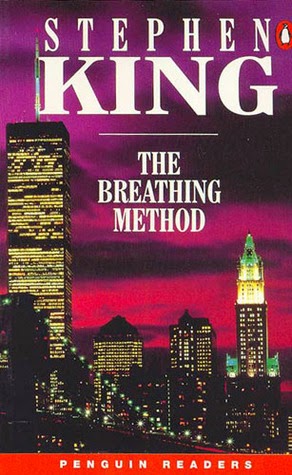
The final story is movie-less. For now. And probably forever since I don't know if it would work on the screen. It's sort of a quiet story about a club where people tell stories. There's sort of something magical about this club, which on the surface seems like a stuffy, wood-paneled, old man's club. No one really explains what's going on, but there seem to be lots of books to read by authors that can't be found anywhere else, published by companies that don't seem to exist outside this home. And people tell stories. Sometimes they're funny, sometimes they're sad, sometimes they're scary. We hear little bits of a few of the stories but the main one we focus on is the Christmas story "The Breathing Method". Now, this isn't a story about Christmas, but the Thursday before Christmas is when people tell the most...off-putting tale. I won't go into it but to let you know that I really liked this story. The whole story (frame & main) have the same feeling and in the end nothing is really explained, which works for it.
Overall good times. If you want to try out King, I recommend his short works. And if you want something a bit longer than his short stories but aren't quite ready to commit to one of his full novels (which, I mean, can drag on) this is a great place to try. Really, if nothing else, try to find Rita Hayworth and the Shawshank Redemption.
Title quote from page 393
King, Stephen. Different Seasons. Hoddor, 1982.

The minithon helped me a bit with the reading (and a lot with the eating-mini-things and coming-up-with-mini-justifications) and after finishing up with Bryson's In A Sunburned Country I picked up Different Seasons by Stephen King. Laura got it for me for Christmas and since it's a collection of King novellas, it counted as mini. I mean, sort of mini. By King standards. By other author standards it's a bunch of novels. Figure the book is over 600 pages and there's only 4 stories in here. Not long novels, but still, you could call them novels and people wouldn't call you a liar.
You probably already know 3 of the stories. They've been made into movies, and that's not to say you only know them cos of their movie-ness, but you know...if you know them, it's likely because MOVIES. I've seen 2 out of the 3 movies, and know of the third, so I'll just assume you're all in the same boat as me.
Right, maybe I should get to the stories. And since this is 4 short novels, I'll give you a brief review of each.
So the first one is Rita Hayworth and the Shawshank Redemption, which was my favorite. The other stories are good but I almost wish this was the last story because it's hard for the other ones to compete. If you don't already know the story, how'd you manage that? Because I'm pretty sure that movie is playing on TV on some channel right now. Andy Dufresne is in Shawshank prison for the murder of his wife and her lover. Long-timer Red tells the story of Andy, who seems to confound the prisoners and guards alike. He has a confidence about him, even in these dark circumstances. There are no surprises going from the movie to the book. What you see on film is essentially what you get in the story, so good job, filmmakers. This isn't a horror story. There's nothing supernatural here, although there is some violence. I highly recommend this one. Probably one of King's bests.
I know I said that I wish this story came at the end because the other stories had a hell of an act to follow. But the other novellas did a good job. I mean, I still like Shawshank best, but the others are excellent in their own right.
The second story is Apt Pupil which is the second movie I saw and I can't even remember why I saw it. But I'm pretty sure I not only saw it but went out of my way to to rent it. Possibly on VHS. Unlike Shawshank and the other stories in this collection, this is the closest to a horror story in this collection. Again, there's nothing supernatural here but it's scary. Scary and disturbing and gave me stress headaches. Which I guess is sort of a good thing cos this is a story about Nazis so I think being deeply disturbed is the correct response. Thirteen year old Todd Bowden discovers there's a fugitive Nazi living in his neighborhood and decides to blackmail the guy into telling him everything he can about the concentration camps and the general shittery that was the Nazis. The Nazi Arthur Denker/Kurt Dussander at first doesn't want to reminisce but eventually something awakens in him. It's a messed up story that gets more and more violent and more and more hopeless. It was very well written, but not one I think I'll be re-reading anytime soon. Which is vaguely how I remember the movie so while I'm pretty sure the movie changed a lot, it did at least keep that spirit.
The third story is The Body, which was made into the film Stand By Me, which is the movie I haven't seen. Which is silly because I hear excellent things about it and I should probably fix that. ANYWAY, this is another story you probably already know the plot of, but I'll share anyway. Four twelve-year-olds find out there's a dead body and decide to go see it. OK, well that's the basic plot and what puts the story in motion. The story is a coming of age story about these four boys, Gordie (who is narrating the story as an adult), Chris, Vern, and Teddy. None of them are coming from great home lives. Gordie's parents have never really paid attention to him and the death of his older brother made things worse. Chris comes from a family of criminals and is branded a delinquent by the town. Teddy idolizes his father who has severe PTSD after coming home from Vietnam and caused permanent damage to the boy before being taken away. Everyone, including his family, picks on Vern (with possible beatings, but I kept mixing up Chris and Vern so it could be possible Vern didn't get beaten at home. Or they both did. I could try to skim through and see if I can find evidence one way or another but laaaaazy). The boys go on a journey to find this dead body, face down bullies, learn about themselves, all the things you expect from a coming of age story. Again, not a horror story but not exactly a happy story either. Very well done though.
The final story is movie-less. For now. And probably forever since I don't know if it would work on the screen. It's sort of a quiet story about a club where people tell stories. There's sort of something magical about this club, which on the surface seems like a stuffy, wood-paneled, old man's club. No one really explains what's going on, but there seem to be lots of books to read by authors that can't be found anywhere else, published by companies that don't seem to exist outside this home. And people tell stories. Sometimes they're funny, sometimes they're sad, sometimes they're scary. We hear little bits of a few of the stories but the main one we focus on is the Christmas story "The Breathing Method". Now, this isn't a story about Christmas, but the Thursday before Christmas is when people tell the most...off-putting tale. I won't go into it but to let you know that I really liked this story. The whole story (frame & main) have the same feeling and in the end nothing is really explained, which works for it.
Overall good times. If you want to try out King, I recommend his short works. And if you want something a bit longer than his short stories but aren't quite ready to commit to one of his full novels (which, I mean, can drag on) this is a great place to try. Really, if nothing else, try to find Rita Hayworth and the Shawshank Redemption.
Title quote from page 393
King, Stephen. Different Seasons. Hoddor, 1982.
Monday, January 6, 2014
Protecting the hotel was his job. He was the caretaker.
While I was reading* Pride and Prejudice I decided I needed something to break up all of the balls and formal language and all of that fun stuff. So I decided to go with The Shining because apparently I want to make sure if I'm reading two things at once, they need to be at opposite ends of the spectrum. Also I would like to read Doctor Sleep at some point and I'm pretty sure The Shining was on sale.
Last time I read this book I was around 14. I lent my book to someone else who never returned it, and I haven't re-read it since. Also if you're wondering why I'm all nervous lending books out, this. This is why.
I remembered the basic story, I remembered it was different than the movie, and I remembered that Joey from Friends would put the book in the freezer when he wasn't reading it.
For those of you that perhaps don't know the story, Jack Torrence has recently accepted a position as caretaker at the Overlook Hotel for the winter. The hotel is only open in the spring and summer because the winter weather makes the mountain passes...well, unpassable. And the phone lines go out as well. Someone needs to hang out at the TOTALLY ISOLATED hotel and make sure things are still in good condition come next spring, and in this case that someone is Jack, his wife Wendy and young son Danny.
Jack's had trouble with alcohol and his temper in the past, so this is a last chance to start his life fresh. He'll take the time to work on his play, his friend will see if he can smooth things over at the school he used to work at, and really, the family needs the money. But there's something not right about the hotel. Halloran, the hotel cook, recognizes Danny's ability to "shine," to read minds a bit and to be able to see events, sometimes in the future, sometimes in the past. He warns Danny that the hotel may show him things that are scary but they're just pictures. But what if they're something more?
The atmosphere at the Overlook is what's so great. It's so scary and tense, but it builds slowly. The family gets up to the hotel and things start to go wrong, but it's not enough to scare them away. Which is a thing I forgot about and makes everything so much worse. I forgot how much of the book takes place when the family could have left the hotel. They go up to the Overlook early in the book, but it's not like they immediately get snowed in. They regularly go into town and go to the library and the little shop. They had a chance to get away, all three of them, before the hotel takes control. And of course they don't. I hope that isn't a spoiler for you, but really, if they did get away before things got really bad then clearly there wouldn't be a story.
This is a seriously scary book. The tension slowly mounts until you (and the Torrence's) are about to snap. And then they do.
The book is so much more than just a haunted hotel story. The main story, the main conflict, is Jack against himself. The hotel may have its demons, but the ones within Jack are just as scary and just as much of a threat to the family. That's the part the movie missed. I still like the Kubrick movie, but the book is so much scarier. Which is too bad cos you'd think Kubrick would have made use of all of the really creepy things going on instead of just deciding Nicholson is crazy, that'll do. And while I heart his performance, it's not Jack Torrence. The whole thing with Jack is the change he goes through to become the monster he is by the end, the monster he'd been trying to keep under control. Nicholson's Jack was crazy from the beginning, and you never got the feeling that he was anything other than this murderous psychopath. He was jut playacting that he was something different. Really during that first interview they should have known how having him as caretaker was going to play out.
Even if you're not a King fan, you should read this book. If you're not a horror fan, you should probably stay away because Joey hiding the book in the freezer isn't a bad idea.
*My reviews are really far behind. I didn't realize just how backlogged I am until I started to write this one and realized I read this over Thanksgiving. So yeah. There you go.
Title quote from page 332, location 5825
King, Stephen. The Shining. Originally published Doubleday, 1977. Kindle edition published Random House, 2008.
Last time I read this book I was around 14. I lent my book to someone else who never returned it, and I haven't re-read it since. Also if you're wondering why I'm all nervous lending books out, this. This is why.
I remembered the basic story, I remembered it was different than the movie, and I remembered that Joey from Friends would put the book in the freezer when he wasn't reading it.
For those of you that perhaps don't know the story, Jack Torrence has recently accepted a position as caretaker at the Overlook Hotel for the winter. The hotel is only open in the spring and summer because the winter weather makes the mountain passes...well, unpassable. And the phone lines go out as well. Someone needs to hang out at the TOTALLY ISOLATED hotel and make sure things are still in good condition come next spring, and in this case that someone is Jack, his wife Wendy and young son Danny.
Jack's had trouble with alcohol and his temper in the past, so this is a last chance to start his life fresh. He'll take the time to work on his play, his friend will see if he can smooth things over at the school he used to work at, and really, the family needs the money. But there's something not right about the hotel. Halloran, the hotel cook, recognizes Danny's ability to "shine," to read minds a bit and to be able to see events, sometimes in the future, sometimes in the past. He warns Danny that the hotel may show him things that are scary but they're just pictures. But what if they're something more?
The atmosphere at the Overlook is what's so great. It's so scary and tense, but it builds slowly. The family gets up to the hotel and things start to go wrong, but it's not enough to scare them away. Which is a thing I forgot about and makes everything so much worse. I forgot how much of the book takes place when the family could have left the hotel. They go up to the Overlook early in the book, but it's not like they immediately get snowed in. They regularly go into town and go to the library and the little shop. They had a chance to get away, all three of them, before the hotel takes control. And of course they don't. I hope that isn't a spoiler for you, but really, if they did get away before things got really bad then clearly there wouldn't be a story.
This is a seriously scary book. The tension slowly mounts until you (and the Torrence's) are about to snap. And then they do.
The book is so much more than just a haunted hotel story. The main story, the main conflict, is Jack against himself. The hotel may have its demons, but the ones within Jack are just as scary and just as much of a threat to the family. That's the part the movie missed. I still like the Kubrick movie, but the book is so much scarier. Which is too bad cos you'd think Kubrick would have made use of all of the really creepy things going on instead of just deciding Nicholson is crazy, that'll do. And while I heart his performance, it's not Jack Torrence. The whole thing with Jack is the change he goes through to become the monster he is by the end, the monster he'd been trying to keep under control. Nicholson's Jack was crazy from the beginning, and you never got the feeling that he was anything other than this murderous psychopath. He was jut playacting that he was something different. Really during that first interview they should have known how having him as caretaker was going to play out.
Even if you're not a King fan, you should read this book. If you're not a horror fan, you should probably stay away because Joey hiding the book in the freezer isn't a bad idea.
*My reviews are really far behind. I didn't realize just how backlogged I am until I started to write this one and realized I read this over Thanksgiving. So yeah. There you go.
Title quote from page 332, location 5825
King, Stephen. The Shining. Originally published Doubleday, 1977. Kindle edition published Random House, 2008.
Posted by
Red
at
9:00 AM
Protecting the hotel was his job. He was the caretaker.
2014-01-06T09:00:00-05:00
Red
Shining|Stephen King|
Comments
Labels:
Shining,
Stephen King
Friday, November 15, 2013
On the other side of 400 there was nothing but high green grass
First up, I'm sorry for being very MIA this week. Work has been 9 types of nuts so when I get home I want to do nothing. Of course a few of the nights so far I have done things, which also gets in the way of doing blog stuff as I am out doing things and not home. Please accept this PBS Idea Channel* video about the complications in wanting to see Ender's Game knowing that OSC is a douche canoe. I just wish this video had been a thing when I did my Authors That Suck post.
Second, I think I need to plan my Halloween reads better. It's taking me awhile to get around and review things which means while I read the scary books during October, I'm not posting stuff about them until November. And now is the time to be talking about turkey stuff or something. Though since this would involve selecting books I'm going to read ahead of time, this probably won't happen.
So anyway. Review. October was nearing the end and I didn't feel I'd read enough season-appropriate books so I was on the lookout when Kayleigh wrote a post that included a review for a Stephen King/Joe Hill collaboration. I had read Horns not long before (again, see the planning thing and that was from Kayleigh cos she dictates my Hill reading, apparently) and was happy to try out some more. Besides this sounded extra creepy and I really wanted to see what these two could come up with when they join forces. I was not disappointed. Well, there was a little disappointment. See this is a short story, which I knew going into it, BUT STILL, when I got to the end I was like "OK, so could you guys go back and make that a full novel, kthxbai."
Siblings Cal and Becky are driving through the middle of no where somewhere in Kansas. While passing through what looks like a sea of grass they hear a little boy yelling for help. Being the good people that they are they decide to wade into this tall grass and try to find the kid. Of course there's also a second voice telling them to stay away, telling the kid to quit calling to them, that he'll hear them.
It seemed so simple. Go into the grass, find the little boy, get back out. But is it that simple? It's so easy to lose your way in this grass that is well over 6 feet tall. And it seems like someone you thought was right next to you one minute turns out to be several meters away the next. And who's this person that second voice is afraid will find them?
I plowed through this story. I didn't realize until I went to write this that I hadn't even highlighted any lines I liked. And it's not that there weren't good lines, it was just that there was no time to stop and highlight something. THINGS ARE HAPPENING!
I can't say too much because I don't want to spoil anything. But you should read this. I mean, it's short so even if it ends up not being your thing you haven't wasted much time. Unless you don't like scary things. Maybe stay away from it then. But otherwise, yeah, check it out.
*I'm going to get all of you to start watching this channel. Just wait.
Title quote from location 50
Hill, Joe and Stephen King. In The Tall Grass. Scribner, 2012
Second, I think I need to plan my Halloween reads better. It's taking me awhile to get around and review things which means while I read the scary books during October, I'm not posting stuff about them until November. And now is the time to be talking about turkey stuff or something. Though since this would involve selecting books I'm going to read ahead of time, this probably won't happen.
So anyway. Review. October was nearing the end and I didn't feel I'd read enough season-appropriate books so I was on the lookout when Kayleigh wrote a post that included a review for a Stephen King/Joe Hill collaboration. I had read Horns not long before (again, see the planning thing and that was from Kayleigh cos she dictates my Hill reading, apparently) and was happy to try out some more. Besides this sounded extra creepy and I really wanted to see what these two could come up with when they join forces. I was not disappointed. Well, there was a little disappointment. See this is a short story, which I knew going into it, BUT STILL, when I got to the end I was like "OK, so could you guys go back and make that a full novel, kthxbai."
Siblings Cal and Becky are driving through the middle of no where somewhere in Kansas. While passing through what looks like a sea of grass they hear a little boy yelling for help. Being the good people that they are they decide to wade into this tall grass and try to find the kid. Of course there's also a second voice telling them to stay away, telling the kid to quit calling to them, that he'll hear them.
It seemed so simple. Go into the grass, find the little boy, get back out. But is it that simple? It's so easy to lose your way in this grass that is well over 6 feet tall. And it seems like someone you thought was right next to you one minute turns out to be several meters away the next. And who's this person that second voice is afraid will find them?
I plowed through this story. I didn't realize until I went to write this that I hadn't even highlighted any lines I liked. And it's not that there weren't good lines, it was just that there was no time to stop and highlight something. THINGS ARE HAPPENING!
I can't say too much because I don't want to spoil anything. But you should read this. I mean, it's short so even if it ends up not being your thing you haven't wasted much time. Unless you don't like scary things. Maybe stay away from it then. But otherwise, yeah, check it out.
*I'm going to get all of you to start watching this channel. Just wait.
Title quote from location 50
Hill, Joe and Stephen King. In The Tall Grass. Scribner, 2012
Posted by
Red
at
9:00 AM
On the other side of 400 there was nothing but high green grass
2013-11-15T09:00:00-05:00
Red
In The Tall Grass|Joe Hill|Stephen King|
Comments
Labels:
In The Tall Grass,
Joe Hill,
Stephen King
Wednesday, January 23, 2013
The Constitution's been canceled in The Mill
I just finished Stephen King's Under the Dome and man. That was a long and stressful journey.
I don't really mean to read so much King. It just sort of happens, usually because I find copies of his books on sale and go "why not". Besides, if I ever want a book that's going to suck me in, King is a good way to go. And he's written roughly 2 bazillion novels so there is a LOT to choose from. And Laura was kind enough to put together a list of King books I should read based on his other stuff that I like.
The plot itself is very simple: one day a dome of some sort closes off the Maine (of course) town of Chester Mill from the rest of the world. No one knows what the dome is or where it came from but you can't get out and nothing can get in. And IMMEDIATELY shit starts to go wrong. Sort of Lord of the Flies mixed with a little An Inconvenient Truth.
There are a TON of characters to keep track of. I really should have made a chart. Except the chart would have to have been constantly revised. But there weren't so many characters that I couldn't follow or didn't enjoy it. I liked having so many characters to watch and it really made sense when you consider it was an entire town of around 2,000 people trapped together. Some are more directly involved with the action but everyone in town is affected in some way.
Big Jim Rennie is one of the best villains I can think of. He's intelligence, conniving, power-obsessed, narcissistic asshole. Every time he's around you know something bad is going to happen and the way he is able to manipulate people is disgusting and a bit impressive. The hero characters (Dale "Barbie" Barbara, Julia Shumway, Eric "Rusty" Everett) are all good and interesting people but it's not the same. There isn't really a lot of grey area with the characters. Sure, not all of them are as evil as big Jim, but for the most part all of the characters fall into one camp or the other. Which is fine and works with this story.
I said the story is long and stressful, and it is. It's 1,092 pages, at least according to Goodreads. I read the thing on my Kindle so I'm not exactly sure how long it is, other than I'm really glad I was reading a digital copy instead of a physical one. And it's stressful because OMG there is so much that happens to our poor characters. And just when you think nothing else awful can happen to them you realize you have nother 500 pages to go and your heart sinks a little because you know things are just going to get worse before they can (hopefully? maybe? please?) start to get better.
Here's my only problem with Under the Dome. I love the premise that there's this town completely cut off from everything but this dome. I love watching how the citizens react and how things start going downhill real fast. What I was less interested in was the dome itself and why it's there. And that's the problem. You can't just plunk down this dome and then have no explanation for it. That sucks. But if you DO explain it, then you spend time with the characters dealing with that instead of the craziness going on with the other people, and then I start to lose interest. I can't think of a way that this could have been remedied and still keep the dome so whomp.
TL;DR? Good, but not GREAT King with excellent build up but a bit of a let down ending.
There is apparently to be a TV mini-series adaptation of the book coming out this summer (so sayeth Wikipedia). If so I'll need to make sure to catch it. I know King adaptations can go very badly, but I still like to give them a try. Plus I liked the mini-series adaptation of The Shining so maybe that's the way to go with his stuff.
Title quote from location 3440
King, Stephen. Under the Dome. Scribner, 2009. Kindle edition.
I don't really mean to read so much King. It just sort of happens, usually because I find copies of his books on sale and go "why not". Besides, if I ever want a book that's going to suck me in, King is a good way to go. And he's written roughly 2 bazillion novels so there is a LOT to choose from. And Laura was kind enough to put together a list of King books I should read based on his other stuff that I like.
The plot itself is very simple: one day a dome of some sort closes off the Maine (of course) town of Chester Mill from the rest of the world. No one knows what the dome is or where it came from but you can't get out and nothing can get in. And IMMEDIATELY shit starts to go wrong. Sort of Lord of the Flies mixed with a little An Inconvenient Truth.
There are a TON of characters to keep track of. I really should have made a chart. Except the chart would have to have been constantly revised. But there weren't so many characters that I couldn't follow or didn't enjoy it. I liked having so many characters to watch and it really made sense when you consider it was an entire town of around 2,000 people trapped together. Some are more directly involved with the action but everyone in town is affected in some way.
Big Jim Rennie is one of the best villains I can think of. He's intelligence, conniving, power-obsessed, narcissistic asshole. Every time he's around you know something bad is going to happen and the way he is able to manipulate people is disgusting and a bit impressive. The hero characters (Dale "Barbie" Barbara, Julia Shumway, Eric "Rusty" Everett) are all good and interesting people but it's not the same. There isn't really a lot of grey area with the characters. Sure, not all of them are as evil as big Jim, but for the most part all of the characters fall into one camp or the other. Which is fine and works with this story.
I said the story is long and stressful, and it is. It's 1,092 pages, at least according to Goodreads. I read the thing on my Kindle so I'm not exactly sure how long it is, other than I'm really glad I was reading a digital copy instead of a physical one. And it's stressful because OMG there is so much that happens to our poor characters. And just when you think nothing else awful can happen to them you realize you have nother 500 pages to go and your heart sinks a little because you know things are just going to get worse before they can (hopefully? maybe? please?) start to get better.
Here's my only problem with Under the Dome. I love the premise that there's this town completely cut off from everything but this dome. I love watching how the citizens react and how things start going downhill real fast. What I was less interested in was the dome itself and why it's there. And that's the problem. You can't just plunk down this dome and then have no explanation for it. That sucks. But if you DO explain it, then you spend time with the characters dealing with that instead of the craziness going on with the other people, and then I start to lose interest. I can't think of a way that this could have been remedied and still keep the dome so whomp.
TL;DR? Good, but not GREAT King with excellent build up but a bit of a let down ending.
There is apparently to be a TV mini-series adaptation of the book coming out this summer (so sayeth Wikipedia). If so I'll need to make sure to catch it. I know King adaptations can go very badly, but I still like to give them a try. Plus I liked the mini-series adaptation of The Shining so maybe that's the way to go with his stuff.
Title quote from location 3440
King, Stephen. Under the Dome. Scribner, 2009. Kindle edition.
Posted by
Red
at
9:24 AM
The Constitution's been canceled in The Mill
2013-01-23T09:24:00-05:00
Red
Stephen King|Under the Dome|
Comments
Labels:
Stephen King,
Under the Dome
Friday, November 9, 2012
Couldn't plant nothing here but corpses anyway
It was almost the end of October and I realized I hadn't read a single Halloween worthy book. The Grapes of Wrath readalong (which was super fun) took up a lot of time, as well as the book Ad Nomad, which I'm still working my way through. Anyway, I decided I needed to fix that so I picked up Stephen King's Pet Sematary. And then a couple days later we got slammed by Hurricane Sandy and we lost power. I mentioned before, I COULD have stopped reading Pet Sematary and gone with something else. Something better to read when you have no power and are trying to balance a flashlight. But I'm stubborn so I kept going. I'm very happy our power came back before I finished this.
There are some King books I'll recommend to people who aren't horror fans. Pet Sematary is not one of them. Go into this one knowing you will be getting a horror story. King even says that this is the book that scares him. But it's so much more than just a simple scary story.
I first read this book in college for my Horror Fiction class. I'm glad I did because there's something about the basic plot synopsis that doesn't interest me. The Creed family (husband Louis, wife Rachel, daughter Ellie, son Gage) move to an idyllic home in Maine (of course), but there's an evil lurking in the woods behind their house. Sure, there's the Pet Sematary, a place where the neighborhood kids bury their passed pets, and that's sorta creepy. But there's something beyond the cemetery, down the dead fall where something ominous resides. And the family will learn that sometimes dead is better.
See that's creepy but nothing to really grab my attention. However, that's not really what the story is about. I mean, that's what happens but it's really about death. It's about dealing with the very real experience of death, something everyone will face. It's about coming to terms with the inevitability, not only for yourself but for your loved ones. And it's what happens when you refused to come to terms with it.
What really got me interested in the story was King's introduction. Or rather the story about his own daughter that inspired the story and even featured in the book. King lived in a home similar to the Creeds that was also on a very busy street. And like Ellie, King's young daughter had a cat. And like Ellie's cat Church, King's daughter's cat got run over by a truck. King and his wife tell his daughter what happened and they bury her cat in the pet sematary down the street from them, and all seemed fine. Until that night when he heard his daughter jumping up and down on bubble wrap screaming "I want my cat back! God can get his OWN cat!" I don't know what it is exactly but I love that scene, in both King's retelling of his daughter and Ellie's reaction at the thought of Church getting hurt.
This is a deeply upsetting book. It's scary, absolutely. It's scary and unsettling. But more than that, it's upsetting. It's a book that made me cry, where Grapes never did. It's a book that makes you WANT to jump up and down on bubble wrap and curse God because sometimes unfair things happen. And I always love a book where I spend the whole time hoping things will turn out differently this time, even though I know exactly how things are going to go.
I know I haven't really said much about the story, but I don't want to give away too much. Just know that this is one of King's best, at least out of the ones I've read. If you like horror, or at least if you are willing to try horror, read this one. Oh and avoid the movie. Just ignore that one.
Title quote from page 46
King, Stephen. Pet Sematary. Pocket Books, 2001. Originally published 1983.
There are some King books I'll recommend to people who aren't horror fans. Pet Sematary is not one of them. Go into this one knowing you will be getting a horror story. King even says that this is the book that scares him. But it's so much more than just a simple scary story.
I first read this book in college for my Horror Fiction class. I'm glad I did because there's something about the basic plot synopsis that doesn't interest me. The Creed family (husband Louis, wife Rachel, daughter Ellie, son Gage) move to an idyllic home in Maine (of course), but there's an evil lurking in the woods behind their house. Sure, there's the Pet Sematary, a place where the neighborhood kids bury their passed pets, and that's sorta creepy. But there's something beyond the cemetery, down the dead fall where something ominous resides. And the family will learn that sometimes dead is better.
See that's creepy but nothing to really grab my attention. However, that's not really what the story is about. I mean, that's what happens but it's really about death. It's about dealing with the very real experience of death, something everyone will face. It's about coming to terms with the inevitability, not only for yourself but for your loved ones. And it's what happens when you refused to come to terms with it.
What really got me interested in the story was King's introduction. Or rather the story about his own daughter that inspired the story and even featured in the book. King lived in a home similar to the Creeds that was also on a very busy street. And like Ellie, King's young daughter had a cat. And like Ellie's cat Church, King's daughter's cat got run over by a truck. King and his wife tell his daughter what happened and they bury her cat in the pet sematary down the street from them, and all seemed fine. Until that night when he heard his daughter jumping up and down on bubble wrap screaming "I want my cat back! God can get his OWN cat!" I don't know what it is exactly but I love that scene, in both King's retelling of his daughter and Ellie's reaction at the thought of Church getting hurt.
This is a deeply upsetting book. It's scary, absolutely. It's scary and unsettling. But more than that, it's upsetting. It's a book that made me cry, where Grapes never did. It's a book that makes you WANT to jump up and down on bubble wrap and curse God because sometimes unfair things happen. And I always love a book where I spend the whole time hoping things will turn out differently this time, even though I know exactly how things are going to go.
I know I haven't really said much about the story, but I don't want to give away too much. Just know that this is one of King's best, at least out of the ones I've read. If you like horror, or at least if you are willing to try horror, read this one. Oh and avoid the movie. Just ignore that one.
Title quote from page 46
King, Stephen. Pet Sematary. Pocket Books, 2001. Originally published 1983.
Posted by
Red
at
9:02 AM
Couldn't plant nothing here but corpses anyway
2012-11-09T09:02:00-05:00
Red
Pet Sematary|Stephen King|
Comments
Labels:
Pet Sematary,
Stephen King
Monday, June 4, 2012
You might understand that all the joy has gone out of the world for you...but you go on
I've mentioned a couple times now that I've been trying to write this review of Stephen King's Full Dark, No Stars and yet something kept getting in the way. Usually my laziness. The first thing I want to make clear is I didn't procrastinate on writing this because I didn't like it. Because I did. I also happen to think I have a pretty good excuse for putting this off a little longer, since technically this morning (Sunday) I was in Boston at a friend's bachelorette party* and had to go through all of the steps of sleeping (for a couple hours) then trekking my ass back to NY. But I will get this written! If only because I've already finished one other book and I've started too more. I don't want to get too far from reading this before I write down something. But if this post is just a rambly mess of nonsense, you at least know why.
So Stephen King, Full Dark, No Stars. I mentioned in my post about bookish shopping that I love me some remainder table books. Boyfriend and I were wandering around our local bookstore and I was about to leave without buying anything (gasp) when I decided I needed one more spin around the remainder tables. That's when I saw this King book and I thought "This sounds like a title I think I said I was going to read so I put it on my Goodreads list. I don't want to check my phone and see because I'm afraid the people working here will think I'm checking the price on Amazon or something, so I'll just get it." In case you're wondering, no, apparently I hadn't put this on my Goodreads TBR list, but that's cool because it was an excellent read anyway.
Full Dark, No Stars is a collection of 5 short stories. Or maybe 5 novellas? 3 novellas and 2 short stories? I'm not really sure how to make this distinction but there are 5 stories and the book is 386 pages long. Take from that information what you will. I've been burned by failed short story collections before** but I've had success with King short stories before so I was hopeful. I'm never sure the best way to review a collection of stories, so I'll go with some brief thoughts on the 5 different stories.
1922
A man, Wilfred James, writes his confession about how he murdered his wife. It's a straightforward premise and there's nothing supernatural in the story but it feels like King. The story is a true tragedy. A single action (the murder of Arlene) sets into action a downward spiral for Wilfred and his son Hank. It's a gory story, at least in parts, and I spent so much time wishing things had just turned out differently for the character. Which I suppose is the normal reaction for the tragedy. "I wish you could go back in time and not do X so then Y won't happen." But of course, they can't go back. So I just followed the story wishing and hoping things would turn out OK, but knowing that isn't how things work out. The story is disgusting with an unlikable protagonist (he murdered his wife cos she wanted to sell the farm and move to the city and he didn't want to) but the story works so well.
Big Driver
When I was first reading this story I was really upset by it. I wasn't sure if I was going to finish it. In the end it was my favorite story, although certainly not the best one. I've gone back and forth deciding if this next bit of info is a spoiler or not. I've decided no, the story stays the same if you know this is coming (and you sort of guess it's coming). However, if you want to skip ahead, feel free. The reason the story upset me and I thought maybe I'll just skip this one is a violent rape scene. There are worse, more violent, more graphic rape scenes in other books, but that didn't make this one easy and it left a bad taste in my mouth. Which I suppose is the purpose so point King. It's not the best story because it's sort of contrived HOWEVER it's a revenge fantasy story so I acknowledged how unrealistic things were and decided I didn't care. It may not have been realistic but it felt better. I was cheering.
Fair Extension
This is the only story with supernatural elements. A man makes a pact with the devil, but it's not the typical Faustian bargain story. There's no moral. There's no lesson. It's similar to the first story in that it's a tragedy with an unlikeable narrator, but the supernatural element makes the difference. Overall I preferred the first one because it's more fleshed out but expanding on the characters in this story wouldn't have served the purpose. It did what it needed to do, what it wanted to do and I can't imagine it working differently.
A Good Marriage
How well can you really know someone? Even someone you've been married to for years? It's not a new question but I haven't seen it explored quite this way, from this point of view. I don't want to say too much because it would be easy to give a lot away. As things are revealed I kept hoping for a logical explanation, something other than what was staring me in the face. But even as I hoped for it, I knew that wouldn't be the case. Because if it was, then this wouldn't be a King story. This was excellent and disturbing.
Bonus story! Under the Weather
This was a creepy short story. It's only 15 pages long so there isn't a lot of time for character development. But like with "Fair Extension" that's not the point. However, I wasn't crazy about this story. It's weird and it's creepy but overall I was meh about it.
If I could identify any theme among the stories, it would be they all made me uncomfortable. But in a good way. Because if the stories didn't make me feel uncomfortable then I'm pretty sure I would need to check my moral compass.
*She of the bookish invitation
** I'm looking at you My Mother She Killed Me...
Title quote from page 42
King, Stephen. Full Dark, No Stars. Gallery Books, 2010
So Stephen King, Full Dark, No Stars. I mentioned in my post about bookish shopping that I love me some remainder table books. Boyfriend and I were wandering around our local bookstore and I was about to leave without buying anything (gasp) when I decided I needed one more spin around the remainder tables. That's when I saw this King book and I thought "This sounds like a title I think I said I was going to read so I put it on my Goodreads list. I don't want to check my phone and see because I'm afraid the people working here will think I'm checking the price on Amazon or something, so I'll just get it." In case you're wondering, no, apparently I hadn't put this on my Goodreads TBR list, but that's cool because it was an excellent read anyway.
Full Dark, No Stars is a collection of 5 short stories. Or maybe 5 novellas? 3 novellas and 2 short stories? I'm not really sure how to make this distinction but there are 5 stories and the book is 386 pages long. Take from that information what you will. I've been burned by failed short story collections before** but I've had success with King short stories before so I was hopeful. I'm never sure the best way to review a collection of stories, so I'll go with some brief thoughts on the 5 different stories.
1922
A man, Wilfred James, writes his confession about how he murdered his wife. It's a straightforward premise and there's nothing supernatural in the story but it feels like King. The story is a true tragedy. A single action (the murder of Arlene) sets into action a downward spiral for Wilfred and his son Hank. It's a gory story, at least in parts, and I spent so much time wishing things had just turned out differently for the character. Which I suppose is the normal reaction for the tragedy. "I wish you could go back in time and not do X so then Y won't happen." But of course, they can't go back. So I just followed the story wishing and hoping things would turn out OK, but knowing that isn't how things work out. The story is disgusting with an unlikable protagonist (he murdered his wife cos she wanted to sell the farm and move to the city and he didn't want to) but the story works so well.
Big Driver
When I was first reading this story I was really upset by it. I wasn't sure if I was going to finish it. In the end it was my favorite story, although certainly not the best one. I've gone back and forth deciding if this next bit of info is a spoiler or not. I've decided no, the story stays the same if you know this is coming (and you sort of guess it's coming). However, if you want to skip ahead, feel free. The reason the story upset me and I thought maybe I'll just skip this one is a violent rape scene. There are worse, more violent, more graphic rape scenes in other books, but that didn't make this one easy and it left a bad taste in my mouth. Which I suppose is the purpose so point King. It's not the best story because it's sort of contrived HOWEVER it's a revenge fantasy story so I acknowledged how unrealistic things were and decided I didn't care. It may not have been realistic but it felt better. I was cheering.
Fair Extension
This is the only story with supernatural elements. A man makes a pact with the devil, but it's not the typical Faustian bargain story. There's no moral. There's no lesson. It's similar to the first story in that it's a tragedy with an unlikeable narrator, but the supernatural element makes the difference. Overall I preferred the first one because it's more fleshed out but expanding on the characters in this story wouldn't have served the purpose. It did what it needed to do, what it wanted to do and I can't imagine it working differently.
A Good Marriage
How well can you really know someone? Even someone you've been married to for years? It's not a new question but I haven't seen it explored quite this way, from this point of view. I don't want to say too much because it would be easy to give a lot away. As things are revealed I kept hoping for a logical explanation, something other than what was staring me in the face. But even as I hoped for it, I knew that wouldn't be the case. Because if it was, then this wouldn't be a King story. This was excellent and disturbing.
Bonus story! Under the Weather
This was a creepy short story. It's only 15 pages long so there isn't a lot of time for character development. But like with "Fair Extension" that's not the point. However, I wasn't crazy about this story. It's weird and it's creepy but overall I was meh about it.
If I could identify any theme among the stories, it would be they all made me uncomfortable. But in a good way. Because if the stories didn't make me feel uncomfortable then I'm pretty sure I would need to check my moral compass.
*She of the bookish invitation
** I'm looking at you My Mother She Killed Me...
Title quote from page 42
King, Stephen. Full Dark, No Stars. Gallery Books, 2010
Posted by
Red
at
9:49 AM
You might understand that all the joy has gone out of the world for you...but you go on
2012-06-04T09:49:00-04:00
Red
Full Dark No Stars|Stephen King|
Comments
Labels:
Full Dark No Stars,
Stephen King
Wednesday, March 21, 2012
We each owe a death, there are no exceptions, I know that, but sometimes, oh God, the Green Mile is so long
Stephen King. Whether you love the guy or hate him, you can't deny that the guy can tell a story. I decided to re-read The Green Mile for Ben's Smooth Criminals Reading Challenge for the Prison Book category. I'm so glad I did. I know I should be branching out, reading new things, blah blah blah but no regrets with this one. I originally read this sometime after the movie came out but most of the details I remembered were from the movie.
This isn't a horror story. For those of you that stay away from King because you're afraid, this isn't a horror story. It's not a happy, rainbows and kittens. I mean, the story takes place on death row during the Depression. But there aren't demonic hotels or zombie cats or anything like that. It's the story of Paul Edgecombe, a prison guard at Cold Mountain penitentiary and John Coffey, a giant black man convicted for a brutal crime and sentenced to die. But there's something about Coffey. He doesn't seem like a killer. His first night on the E Block he asks if they leave a light on at night because he's afraid of the dark.
King sucks you into this world he's created. I didn't read this as it first came out, so I didn't read it in its serialized version. I wish I did. It would have been amazing to have the story drawn out like that, waiting to see what was going to happen in the next installment. My copy has all of the books smooshed into one, but you still have the separations for each of the books, so you can see where it would have ended. I could imagine how it would have been to have the story end and have to wait for the next part. It's not like waiting for the next book in a series, because here the story isn't done yet. You don't have the story wrap-up that you get with something like the Harry Potter books.
The story is heart breaking but it never feels manipulative. You feel these characters trapped in the situation and you get angry because it's so unfair. But it's supposed to be unfair. The Jesus references are a little heavy handed. OK, they're a lot heavy handed, but I don't remember them being so obvious. Maybe because the first time I was so enthralled with the story. This time I could take in the scenery a little bit more. But still, it wasn't enough to hurt the story. Which was wonderful and this will definitely be a book I read again.
So even if you don't like horror or aren't a King fan, give this book a try. It's worth it.
Two challenge books in a row completed! What's that? Why thank you, I am on a roll.
Title quote from page 536.
King, Stephen. The Green Mile. Pocket Books, 1996.
This isn't a horror story. For those of you that stay away from King because you're afraid, this isn't a horror story. It's not a happy, rainbows and kittens. I mean, the story takes place on death row during the Depression. But there aren't demonic hotels or zombie cats or anything like that. It's the story of Paul Edgecombe, a prison guard at Cold Mountain penitentiary and John Coffey, a giant black man convicted for a brutal crime and sentenced to die. But there's something about Coffey. He doesn't seem like a killer. His first night on the E Block he asks if they leave a light on at night because he's afraid of the dark.
King sucks you into this world he's created. I didn't read this as it first came out, so I didn't read it in its serialized version. I wish I did. It would have been amazing to have the story drawn out like that, waiting to see what was going to happen in the next installment. My copy has all of the books smooshed into one, but you still have the separations for each of the books, so you can see where it would have ended. I could imagine how it would have been to have the story end and have to wait for the next part. It's not like waiting for the next book in a series, because here the story isn't done yet. You don't have the story wrap-up that you get with something like the Harry Potter books.
The story is heart breaking but it never feels manipulative. You feel these characters trapped in the situation and you get angry because it's so unfair. But it's supposed to be unfair. The Jesus references are a little heavy handed. OK, they're a lot heavy handed, but I don't remember them being so obvious. Maybe because the first time I was so enthralled with the story. This time I could take in the scenery a little bit more. But still, it wasn't enough to hurt the story. Which was wonderful and this will definitely be a book I read again.
So even if you don't like horror or aren't a King fan, give this book a try. It's worth it.
Two challenge books in a row completed! What's that? Why thank you, I am on a roll.
Title quote from page 536.
King, Stephen. The Green Mile. Pocket Books, 1996.
Posted by
Red
at
9:29 AM
We each owe a death, there are no exceptions, I know that, but sometimes, oh God, the Green Mile is so long
2012-03-21T09:29:00-04:00
Red
Smooth Criminals|Stephen King|The Green Mile|
Comments
Labels:
Smooth Criminals,
Stephen King,
The Green Mile
Monday, January 2, 2012
Even people capable of living in the past don't really know what the future holds
I was lucky enough to win a copy of Stephen King's 11/22/63 from Audra at the Unabridged Chick and Klout, which was amazing. Obviously, I'd heard a lot about the book. It keeps showing up on 2011 wrap up lists for top books, or at least most anticipated. So winning a copy was pretty sweet.
The story isn't something I would normally think of as a King book. It's not a horror story. It has the supernatural elements that King is comfortable with, in this case time travel, and it's maybe a thriller but certainly not horror. Our main character, Jake Epping finds a way to travel back in time. Or rather Al, a friend of his that runs the local diner, finds a way. There's a passage in the pantry that brings you out a town in Maine (of course) on Tuesday, September 9, 1958. You can spend as much time as you'd like in the Land of Ago but only 2 minutes will have passed in the present. And each trip back in time is a reset.
Al has a proposition for Jake: go back in time and prevent the JFK assassination before the diner is torn down at the path to the past is lost. If things go wrong, if the future is worse off, you can just go back through the pantry and do a reset. There's no risk. Now of course, the assassination doesn't happen until November 22nd, 1963 so Jake will have some time to kill. He has to make sure Oswald acted alone, that he wasn't just a patsy and that there isn't another shooter on the grassy knoll. And of course the past is obdurate; it doesn't want to be changed.
The story is a thriller in the will he/won't he and if he does, what's that mean for the future way. And there are moments where you're on the edge of your seat, but that's not the majority. A large chunk of the book is about Jake waiting to make his move. He has to learn as much as he can about Oswald to make sure he did act alone but he also just has a lot of time. So he takes on a teaching job, he makes friends, he starts to think maybe the present (or at this point Land of Ahead) is nice and all but maybe he should stay in the Land of Ago. It may seem like these are tangents off the main plot, but it's difficult to make that argument when they make up such a large portion of the book. You almost think it's the Oswald stuff that's interrupting the real story. The scenes of Jake in Jodie, Texas were some of my favorites.
I said this isn't a horror story, but this is absolutely a King story. It feels like his writing and there are disgusting, graphic, grotesque scenes. It may not be horror but there are a few moments of intense violence. I don't want to scare people away but you should at least know what you're getting into.
This is a big book (690 pages according to my ecopy, 849 pages in the hard back copy according to Amazon) and no one will accuse King of being a man of few words, but it reads quickly. One of my complaints is that I actually wanted it to be longer. The ending felt rushed and I wanted the pace slowed down to match the rest, so I felt like I was really getting the whole story.
The rushed ending isn't the only thing I had trouble with. As much as I really liked this, the scenes of Jake in Jodie are almost too perfect. He's instantly a loved and respected teacher among both the students and the faculty. He can instantly bring out the best in students. Now I didn't notice any of these issues while I was reading, it was only after I finished the book and I started thinking about it. (Of course it's been suggested this is on purpose and all part of the past not wanting changed, and I hope so because I like that better than King just gave him some Mary-Sue like qualities.)
Overall, I really liked this book. And I REALLY wanted people to talk to about the book while I was reading it. So if everyone could just read this book so we can all talk about it, that would be super.
Title quote from page 209
King, Stephen. 11/22/63: A Novel. Scribner, 2011. eCopy
The story isn't something I would normally think of as a King book. It's not a horror story. It has the supernatural elements that King is comfortable with, in this case time travel, and it's maybe a thriller but certainly not horror. Our main character, Jake Epping finds a way to travel back in time. Or rather Al, a friend of his that runs the local diner, finds a way. There's a passage in the pantry that brings you out a town in Maine (of course) on Tuesday, September 9, 1958. You can spend as much time as you'd like in the Land of Ago but only 2 minutes will have passed in the present. And each trip back in time is a reset.
Al has a proposition for Jake: go back in time and prevent the JFK assassination before the diner is torn down at the path to the past is lost. If things go wrong, if the future is worse off, you can just go back through the pantry and do a reset. There's no risk. Now of course, the assassination doesn't happen until November 22nd, 1963 so Jake will have some time to kill. He has to make sure Oswald acted alone, that he wasn't just a patsy and that there isn't another shooter on the grassy knoll. And of course the past is obdurate; it doesn't want to be changed.
The story is a thriller in the will he/won't he and if he does, what's that mean for the future way. And there are moments where you're on the edge of your seat, but that's not the majority. A large chunk of the book is about Jake waiting to make his move. He has to learn as much as he can about Oswald to make sure he did act alone but he also just has a lot of time. So he takes on a teaching job, he makes friends, he starts to think maybe the present (or at this point Land of Ahead) is nice and all but maybe he should stay in the Land of Ago. It may seem like these are tangents off the main plot, but it's difficult to make that argument when they make up such a large portion of the book. You almost think it's the Oswald stuff that's interrupting the real story. The scenes of Jake in Jodie, Texas were some of my favorites.
I said this isn't a horror story, but this is absolutely a King story. It feels like his writing and there are disgusting, graphic, grotesque scenes. It may not be horror but there are a few moments of intense violence. I don't want to scare people away but you should at least know what you're getting into.
This is a big book (690 pages according to my ecopy, 849 pages in the hard back copy according to Amazon) and no one will accuse King of being a man of few words, but it reads quickly. One of my complaints is that I actually wanted it to be longer. The ending felt rushed and I wanted the pace slowed down to match the rest, so I felt like I was really getting the whole story.
The rushed ending isn't the only thing I had trouble with. As much as I really liked this, the scenes of Jake in Jodie are almost too perfect. He's instantly a loved and respected teacher among both the students and the faculty. He can instantly bring out the best in students. Now I didn't notice any of these issues while I was reading, it was only after I finished the book and I started thinking about it. (Of course it's been suggested this is on purpose and all part of the past not wanting changed, and I hope so because I like that better than King just gave him some Mary-Sue like qualities.)
Overall, I really liked this book. And I REALLY wanted people to talk to about the book while I was reading it. So if everyone could just read this book so we can all talk about it, that would be super.
Title quote from page 209
King, Stephen. 11/22/63: A Novel. Scribner, 2011. eCopy
Posted by
Red
at
10:14 AM
Even people capable of living in the past don't really know what the future holds
2012-01-02T10:14:00-05:00
Red
11 22 63|Stephen King|
Comments
Labels:
11 22 63,
Stephen King
Tuesday, December 6, 2011
If you don't [have your tools with you], you're apt to find something you didn't expect and get discouraged
Normally I like to write my reviews immediately (within a day or so at most) of finishing a book. However, Thanksgiving gave me a chance to read a lot without getting much writing done. And then I participated in the readathon last Saturday, so I have a bit of a backlog of reviews to get through. On the one hand, the books now have a chance to simmer and any immediate reaction (what crap! OMG that was the best thing everrrrrr!) have passed and I can give a more mature and well-thought out review. On the other hand, mature and well-thought out reviews. Don't worry, I'll try to keep them as childish as possible.
I've wanted to read Stephen King's On Writing: A Memoir of the Craft ever since I found out my favorite short story, 1408, was originally written as an example of how a story changes from one draft to another. I also happen to think that King is a better writer than he is normally given credit for so I liked the idea of seeing his thoughts on the process.
This was a much better read than I thought it would be. Not that I went into it thinking it would be a drag (why would I have bothered with it if I thought that?) but it was surprisingly good. The first part is a memoir of King's life, told in 38 short events. King focuses on the events that he believes shaped him as a writer: his many rejections (and eventual acceptances) to literary magazines, his time moving around while his mother looked for work, his time working at an industrial laundry mat and then as a professor, to the point that he's at now. Or at least where he was at when he wrote this.
But the focus isn't on King's life, it's on writing. One thing you learn for sure from this, if you learn nothing else, is that King loves writing. He clearly was doing it for many years before it was making him money. He never makes the claim that if you follow steps A, B and C, you're going to become a FAMOUS NOVELIST*. He just says "Here's what I do. I believe these things are going to help you at least be a competent writer." There's no magic here. It's just advice that seems kind of obvious once he tells you. He talks about "the toolbox". The things that you need to write: vocabulary, grammar (don't worry about grammar lessons, you just need to be able to write legibly), form and style the basic stuff. He especially hates adverbs and the passive voice, which again is nothing new, but I like hearing his diatribe against them. Especially because I know I'm guilty of both.
I especially liked the comparison between a first draft and a second draft of a story, in this case the story that eventually became 1408. He ends up going through most of the things he talks about in the rest of the book, but you can see it in a real-life scenario.
I can see myself re-reading this a lot. Or even just references bits and pieces of it, whether I start writing or not.
*Those steps will come from another book I read and need to write a review for, How I Became A Famous Novelist. And by the way, some of the tips from here are mentioned in Hely's book. It was funny to finish this book just to see the stuff mentioned elsewhere. Even if it is sarcastically.
Title quote from page 114
King, Stephen. On Writing: A Memoir of the Craft. Scribner, 2010.
I've wanted to read Stephen King's On Writing: A Memoir of the Craft ever since I found out my favorite short story, 1408, was originally written as an example of how a story changes from one draft to another. I also happen to think that King is a better writer than he is normally given credit for so I liked the idea of seeing his thoughts on the process.
This was a much better read than I thought it would be. Not that I went into it thinking it would be a drag (why would I have bothered with it if I thought that?) but it was surprisingly good. The first part is a memoir of King's life, told in 38 short events. King focuses on the events that he believes shaped him as a writer: his many rejections (and eventual acceptances) to literary magazines, his time moving around while his mother looked for work, his time working at an industrial laundry mat and then as a professor, to the point that he's at now. Or at least where he was at when he wrote this.
But the focus isn't on King's life, it's on writing. One thing you learn for sure from this, if you learn nothing else, is that King loves writing. He clearly was doing it for many years before it was making him money. He never makes the claim that if you follow steps A, B and C, you're going to become a FAMOUS NOVELIST*. He just says "Here's what I do. I believe these things are going to help you at least be a competent writer." There's no magic here. It's just advice that seems kind of obvious once he tells you. He talks about "the toolbox". The things that you need to write: vocabulary, grammar (don't worry about grammar lessons, you just need to be able to write legibly), form and style the basic stuff. He especially hates adverbs and the passive voice, which again is nothing new, but I like hearing his diatribe against them. Especially because I know I'm guilty of both.
I especially liked the comparison between a first draft and a second draft of a story, in this case the story that eventually became 1408. He ends up going through most of the things he talks about in the rest of the book, but you can see it in a real-life scenario.
I can see myself re-reading this a lot. Or even just references bits and pieces of it, whether I start writing or not.
*Those steps will come from another book I read and need to write a review for, How I Became A Famous Novelist. And by the way, some of the tips from here are mentioned in Hely's book. It was funny to finish this book just to see the stuff mentioned elsewhere. Even if it is sarcastically.
Title quote from page 114
King, Stephen. On Writing: A Memoir of the Craft. Scribner, 2010.
Posted by
Red
at
9:59 AM
If you don't [have your tools with you], you're apt to find something you didn't expect and get discouraged
2011-12-06T09:59:00-05:00
Red
On Writing|Stephen King|
Comments
Labels:
On Writing,
Stephen King
Monday, May 30, 2011
Duddits is their dreamcatcher
The more I read of Stephen King's Dreamcatcher, the more I wanted to read. I joked in my last post about the book that in the first 116 pages, nothing really happened. Nothing in terms of action anyway. And I said how that was OK because I loved the characters King was introducing me to. What I didn't mention was that I came to that appreciation after I had already gotten to the point of loving the characters. In the beginning, I had trouble getting into the story. I didn't yet care about the characters, there was no action to draw me in and I hadn't bothered to learn anything about the story. And the length of the book, while not the longest ever, is still just over 600 pages and long books tend to intimidate me anyway.
*Possible spoilers.*
But obviously, I did make it past those first pages and then the story grabbed me and held on. The story deals with aliens and an alien infection and government cover-up but of course, the characters make the story. And in this case it's the childhood friendship of the main characters: Pete, Beaver, Henry, Jonsey and their heart, their dreamcatcher, Duddits. Duddits has Down Syndrome, which gives him this childlike simplicity, without limiting him to a child's understanding, that is sweet and heartbreaking and beautiful. It could have easily moved into cliches at this point, and King is certainly not immune to them, but Duddits manages to be a complete, round character. Duddits manages to be a center
Standing in opposition to Duddits' pure love is Kurtz, the general (?) in charge of containing the grayboys and their Ripley virus. His mission is to make it like they, both the aliens and his men, were never there. Neither the containing of the aliens nor the cover up seem particularly unusual in an alien conspiracy. It's what's expected and the reasoning is sound. It's hard to argue that an alien fungus should not be contained and that it is of the utmost important that those who are infected are not able to infect other people. This is war and war is hell. But Kurtz goes to another level. He shows no empathy, he's unpredictable and everything he does is an act, honed to cultivate a certain image. He's an awful human being, but he's a lot of fun to read. It's just another compliment to King's ability to create believable, interesting characters. They can be the embodiment of love, of hate or just something in between, and they're fun to read.
There is one other part of the book that I loved: the representation of Jonesy's memories. I don't want to go into the details but a warehouse of files with everything Jonsey ever knew and his safety office was fantastic. I (almost) want to see the movie just to see how they do those scenes.
*Spoilers contained*
I was considering seeing the movie version right after reading this. I don't remember too much about it when it came out other than Jason Lee was in it and, begin from NJ, I'm a fan of his from the various Kevin Smith films he's showed up in. Normally, I'll hold off on reading a movie review until I've seen the movie. I know that sounds a little backwards but other than seeing a general movie score (however many starts Ebert gave it and the Rotten Tomatoes score) I'd rather go into a movie fresh. This time, for whatever reason, I decided to read Ebert's review. It's not positive, but to be honest it sounds like something I would expect to happen with a story like this.
If anyone has seen the movie, let me know if I should check it out or avoid it!
Title quote from page 454
King, Stephen. Dreamcatcher. Scribner, 2001.
*Possible spoilers.*
But obviously, I did make it past those first pages and then the story grabbed me and held on. The story deals with aliens and an alien infection and government cover-up but of course, the characters make the story. And in this case it's the childhood friendship of the main characters: Pete, Beaver, Henry, Jonsey and their heart, their dreamcatcher, Duddits. Duddits has Down Syndrome, which gives him this childlike simplicity, without limiting him to a child's understanding, that is sweet and heartbreaking and beautiful. It could have easily moved into cliches at this point, and King is certainly not immune to them, but Duddits manages to be a complete, round character. Duddits manages to be a center
Standing in opposition to Duddits' pure love is Kurtz, the general (?) in charge of containing the grayboys and their Ripley virus. His mission is to make it like they, both the aliens and his men, were never there. Neither the containing of the aliens nor the cover up seem particularly unusual in an alien conspiracy. It's what's expected and the reasoning is sound. It's hard to argue that an alien fungus should not be contained and that it is of the utmost important that those who are infected are not able to infect other people. This is war and war is hell. But Kurtz goes to another level. He shows no empathy, he's unpredictable and everything he does is an act, honed to cultivate a certain image. He's an awful human being, but he's a lot of fun to read. It's just another compliment to King's ability to create believable, interesting characters. They can be the embodiment of love, of hate or just something in between, and they're fun to read.
There is one other part of the book that I loved: the representation of Jonesy's memories. I don't want to go into the details but a warehouse of files with everything Jonsey ever knew and his safety office was fantastic. I (almost) want to see the movie just to see how they do those scenes.
*Spoilers contained*
I was considering seeing the movie version right after reading this. I don't remember too much about it when it came out other than Jason Lee was in it and, begin from NJ, I'm a fan of his from the various Kevin Smith films he's showed up in. Normally, I'll hold off on reading a movie review until I've seen the movie. I know that sounds a little backwards but other than seeing a general movie score (however many starts Ebert gave it and the Rotten Tomatoes score) I'd rather go into a movie fresh. This time, for whatever reason, I decided to read Ebert's review. It's not positive, but to be honest it sounds like something I would expect to happen with a story like this.
If anyone has seen the movie, let me know if I should check it out or avoid it!
Title quote from page 454
King, Stephen. Dreamcatcher. Scribner, 2001.
Posted by
Red
at
11:55 AM
Duddits is their dreamcatcher
2011-05-30T11:55:00-04:00
Red
Dreamcatcher|Stephen King|
Comments
Labels:
Dreamcatcher,
Stephen King
Monday, May 23, 2011
His first reaction to the unplanned and unexpected wasn't a frown but a smile
I was originally thinking I would read Jennifer Egan's A Visit from the Goon Squad, which I was planning on getting as an e-book.* Then I realized I'd be going on vacation in a couple months and not having to pack 10 books is one of the bonuses of the Kindle. This also meant that I should probably hold off reading ebooks for a little while, and hopefully save some money by reading some of the actual books I have lying around the house. And thus I decided to pick up Dreamcatcher by Stephen King. I've been dragging this book around with me for years. My dad had given it to me as a birthday gift when I was in high school. I had forgotten when he gave it to me until a birthday card fell out of the front of the book. I apparently hadn't even opened the book in awhile. It's not that I didn't want to read it. It's just that it's a hardcover book and recently reading this has just reconfirmed how much I dislike reading hardback books. Luckily the book is making it worth it.
I haven't come close to reading the full King catalogue, but I have read a number of his books and have run the gamut from some of my favorite reads (Misery, the short story "1408") to some very meh titles (It). I didn't know what to expect with this one. To be honest I didn't know what it was about when I started it. I didn't even bother to read the blurb about the book until a few pages ago (I'm up to page 250 now). I figured that whatever King had in store, a blurb might describe the basic plot but isn't going to tell me if I'll enjoy it or not. The plot is only a small part of a King story, and I've discovered with him it's better to just dive right in.
King's forte is coming up with some great characters. Not characters you want to hang out with, not characters you particularly admire, but characters you feel like you know, you feel like you can connect with even if you don't want to. When I was around page 116 I was joking with Boyfriend that I could probably sum up everything that had happened thus far in the book in 4 sentences. If you wanted just plot points, those 116 pages held very little in terms of action. However, this isn't a condemnation of the writing. In fact, when the action did start to pick up I actually wished for the story to go back to just the characters. I wanted to learn more and more about their flawed lives. There are no Mary Sue characters in King's world. (Stephanie Meyers, please take note.) He creates characters that you can feel pity for, be proud of, get angry at and most importantly, be interested in.
King puts his characters through the extremes, in this case extraterrestrials. (I was going to say spoiler alert but then I realized it mentions this ins the blurb. So if you're angry at me for not giving a spoiler warning, blame the blurb writer.) The focus isn't entirely on the action, on the weird stuff but instead so much of the story is how the characters react. What will they do? How will they deal with the craziness? And so much of the book so far has involved flashbacks to the main characters' childhood that I'm currently still trying to piece together how it fits in with the story I'm reading now. I trust everything will come together. King doesn't show all his cards all at once and slowly more and more is revealed.
I'm about a third of the way through so there will be at least one more post. I'm excited to see what will happen next, how everyone will react to the outside forces and to one another. King is a writer for the masses that gives you a story that sticks with you, gives you something to think about and Dreamcatcher is proving to be on the better end of the King spectrum. Not only can I not wait to read more of this but I'm adding some more King to my TBR list.
*I think I say this a lot. I'm always planning on doing one thing and then I just end up doing something else. I should probably quit planning on things.
Title quote from page 64
King, Stephen. Dreamcatcher. Scribner, 2001.
I haven't come close to reading the full King catalogue, but I have read a number of his books and have run the gamut from some of my favorite reads (Misery, the short story "1408") to some very meh titles (It). I didn't know what to expect with this one. To be honest I didn't know what it was about when I started it. I didn't even bother to read the blurb about the book until a few pages ago (I'm up to page 250 now). I figured that whatever King had in store, a blurb might describe the basic plot but isn't going to tell me if I'll enjoy it or not. The plot is only a small part of a King story, and I've discovered with him it's better to just dive right in.
King's forte is coming up with some great characters. Not characters you want to hang out with, not characters you particularly admire, but characters you feel like you know, you feel like you can connect with even if you don't want to. When I was around page 116 I was joking with Boyfriend that I could probably sum up everything that had happened thus far in the book in 4 sentences. If you wanted just plot points, those 116 pages held very little in terms of action. However, this isn't a condemnation of the writing. In fact, when the action did start to pick up I actually wished for the story to go back to just the characters. I wanted to learn more and more about their flawed lives. There are no Mary Sue characters in King's world. (Stephanie Meyers, please take note.) He creates characters that you can feel pity for, be proud of, get angry at and most importantly, be interested in.
King puts his characters through the extremes, in this case extraterrestrials. (I was going to say spoiler alert but then I realized it mentions this ins the blurb. So if you're angry at me for not giving a spoiler warning, blame the blurb writer.) The focus isn't entirely on the action, on the weird stuff but instead so much of the story is how the characters react. What will they do? How will they deal with the craziness? And so much of the book so far has involved flashbacks to the main characters' childhood that I'm currently still trying to piece together how it fits in with the story I'm reading now. I trust everything will come together. King doesn't show all his cards all at once and slowly more and more is revealed.
I'm about a third of the way through so there will be at least one more post. I'm excited to see what will happen next, how everyone will react to the outside forces and to one another. King is a writer for the masses that gives you a story that sticks with you, gives you something to think about and Dreamcatcher is proving to be on the better end of the King spectrum. Not only can I not wait to read more of this but I'm adding some more King to my TBR list.
*I think I say this a lot. I'm always planning on doing one thing and then I just end up doing something else. I should probably quit planning on things.
Title quote from page 64
King, Stephen. Dreamcatcher. Scribner, 2001.
Posted by
Red
at
8:56 AM
His first reaction to the unplanned and unexpected wasn't a frown but a smile
2011-05-23T08:56:00-04:00
Red
Dreamcatcher|Stephen King|
Comments
Labels:
Dreamcatcher,
Stephen King
Thursday, July 1, 2010
It was the human mind's final great parlor-trick: the perception of eternity in the place where you'd always expected to spend it
The opening line is from the story "That Feeling, You Can Only Say What It Is in French" which is not really one of my favorite stories of this collection, but I like this quote. I like this story while I'm reading it, but as soon as I read the last sentence I'm done. Out of sight, out of mind as it were. But I made note of this line while reading the story this time and even though the rest of this entry will be about the story "1408" I wanted to include that line.
First I want to get it out of the way that I love this story. It is certainly my favorite of this collection and absolutely in my top 5 favorite short stories. When I got to the last sentence of this tale, it certainly didn't leave me like the deja vu story did. As a matter of fact as soon as I read that last sentence I exhaled (I didn't realize I had been holding my breath) and then I immediately went back to the beginning to do it again. The emotion kind of reminded me of a roller coaster: there's a lot of build up as you climb that first hill, you're grasping tight and screaming as you go around the loops and corkscrews and then when you pull back into the station there's relief and you just want to hop back in line and do it again. That's how I feel about roller coasters anyway and it's how I see this story.
"1408" is King's "story about the Ghostly Room At The Inn" (457) and I can say this is the only story that really scares me. The other stories here might interest me or revolt me but this is really the only one that gets under my skin. I think this is because of that first hill, the build up in Olin's office. Mike Enslin wants to stay in the hotel's haunted room for his book and Olin has been trying to prevent this and this meeting at the beginning of the story is his last attempt to talk Mike out of his quest. But the build up is subtle. You know King is setting you up for the horror to come, but the foreshadowing doesn't beat you over the head.
At one point during this intro Mike pulls out his mini-recorder but soon this move has turned on him. "Usually [the mini-recorder's] little red eye seemed to be watching the other guy, daring him to say the wrong thing. This evening it seemed to be looking at Mike himself." (466). This is the first of many times in this story that simple electronics become this evil presence, but on the first reading I didn't consciously fear the mini-recorder. I just saw this as the first of many things not going the way Mike had intended, but the fact that the mini-recorder is one of the initial sources as discomfort sets you up for that discomfort later in the room.
The build up is my favorite part of the book and it contributes to the fear and unease I feel when Mike actually makes it up to the haunted room. But the fear comes from Mike's time in the room. I think this is because the horrors mostly stay on the peripherals. There's something not quite right you just catch out of the corner of your eye and slowly it builds and it's a gradual build up. Like a frog in a pot of boiling water, you don't notice how everything is going wrong until it's too late to turn back.
King mentions in the intro to this story there is an audio recording of this in the compilation Blood and Smoke. I'd love to hear this. I think I'll avoid the movie because I'm afraid not only will it not live up to what I hope it will be (and really, I don't see how it could, regardless of how well it's made) and I don't want the movie to taint how I feel about the story. There's no moral reason for not wanting to see the movie; I just want the story to keep scaring me.
Next up on the reading queue: I Was Told There Would Be Cake by Sloane Crosley
Title quote from page 455
King, Stephen. “1408”. Everything’s Eventual: 14 Dark Tales. Pocket Books: New York, 2002
First I want to get it out of the way that I love this story. It is certainly my favorite of this collection and absolutely in my top 5 favorite short stories. When I got to the last sentence of this tale, it certainly didn't leave me like the deja vu story did. As a matter of fact as soon as I read that last sentence I exhaled (I didn't realize I had been holding my breath) and then I immediately went back to the beginning to do it again. The emotion kind of reminded me of a roller coaster: there's a lot of build up as you climb that first hill, you're grasping tight and screaming as you go around the loops and corkscrews and then when you pull back into the station there's relief and you just want to hop back in line and do it again. That's how I feel about roller coasters anyway and it's how I see this story.
"1408" is King's "story about the Ghostly Room At The Inn" (457) and I can say this is the only story that really scares me. The other stories here might interest me or revolt me but this is really the only one that gets under my skin. I think this is because of that first hill, the build up in Olin's office. Mike Enslin wants to stay in the hotel's haunted room for his book and Olin has been trying to prevent this and this meeting at the beginning of the story is his last attempt to talk Mike out of his quest. But the build up is subtle. You know King is setting you up for the horror to come, but the foreshadowing doesn't beat you over the head.
At one point during this intro Mike pulls out his mini-recorder but soon this move has turned on him. "Usually [the mini-recorder's] little red eye seemed to be watching the other guy, daring him to say the wrong thing. This evening it seemed to be looking at Mike himself." (466). This is the first of many times in this story that simple electronics become this evil presence, but on the first reading I didn't consciously fear the mini-recorder. I just saw this as the first of many things not going the way Mike had intended, but the fact that the mini-recorder is one of the initial sources as discomfort sets you up for that discomfort later in the room.
The build up is my favorite part of the book and it contributes to the fear and unease I feel when Mike actually makes it up to the haunted room. But the fear comes from Mike's time in the room. I think this is because the horrors mostly stay on the peripherals. There's something not quite right you just catch out of the corner of your eye and slowly it builds and it's a gradual build up. Like a frog in a pot of boiling water, you don't notice how everything is going wrong until it's too late to turn back.
King mentions in the intro to this story there is an audio recording of this in the compilation Blood and Smoke. I'd love to hear this. I think I'll avoid the movie because I'm afraid not only will it not live up to what I hope it will be (and really, I don't see how it could, regardless of how well it's made) and I don't want the movie to taint how I feel about the story. There's no moral reason for not wanting to see the movie; I just want the story to keep scaring me.
Next up on the reading queue: I Was Told There Would Be Cake by Sloane Crosley
Title quote from page 455
King, Stephen. “1408”. Everything’s Eventual: 14 Dark Tales. Pocket Books: New York, 2002
Posted by
Red
at
7:28 PM
It was the human mind's final great parlor-trick: the perception of eternity in the place where you'd always expected to spend it
2010-07-01T19:28:00-04:00
Red
1408|Everything's Eventual|Stephen King|
Comments
Labels:
1408,
Everything's Eventual,
Stephen King
Friday, June 25, 2010
Mr. Maybe They Will vs. Mr. Even If I Do
I'm slowly making my way through Everything's Eventual. I've been traveling for work so my normal reading schedule has been thrown, but I'm back now so hopefully things will move a bit quicker. I also think the fact that this is a book of short stories makes the process longer. I feel like I can't jump right from one story into the next; I need some time to take in what I just read, some time to reflect. Especially with a story I liked. If a story really draws you in you become invested in the characters. It's hard to finish reading their journey and then just move right into a whole new world. Do you find yourself needing some reflection time after finishing a story, be it a short story or a grand epic?
So far I've read through the stories "Autopsy Room Four", "The Man in the Black Suit", "All That You Love Will Be Carried Away", "The Death of Jack Hamilton", "In the Deathroom" and "The Little Sisters of Eluria". My favorite story is near the end of the book, but right now I'll focus on the story "In the Deathroom".
I wouldn't say this is one of my favorites of the book, but other than the one I've already written about it's the one I like the best out of the one's I listed above. Especially as I just finished "The Little Sisters of Eluria" this afternoon, "the Deathroom" is a realistic horror tale. At least as real as my extremely skewed-by-pop-culture view of South American dictatorship allows. Maybe because I've heard/read/watched awful stories about unspeakable crimes happening in dictatorships all over that just the general premise of the story scares me. Even the more ridiculous parts get this extra oomph of realism, simply because in my mind I could imagine this actually happening. I even found myself playing along with the main character Fletcher as he considered his options Maybe They Will, such as "maybe they really will let [him] go" (144) and Even If I Do, such as even if he gets away where will he go. During the "conversation" as Escobar puts it, I found myself thinking what would I do? Would I lie? Play dumb? Try to play it strong? Break down and tell everything I knew? I mean, realistically I know what I would do. I'd get killed. It's pretty much that simple. I found myself going the play dumb route and then getting myself killed. It would be an even shorter story if I was the main character is the bottom line. The game is certainly difficult to play after I already knew the outcome of the story, but I know the first time I was reading it I disagreed with everything he did but then realized he was right, or at least mostly right, and I was wrong.
King, Stephen. “In the Deathroom”. Everything’s Eventual: 14 Dark Tales. Pocket Books: New York, 2002.
So far I've read through the stories "Autopsy Room Four", "The Man in the Black Suit", "All That You Love Will Be Carried Away", "The Death of Jack Hamilton", "In the Deathroom" and "The Little Sisters of Eluria". My favorite story is near the end of the book, but right now I'll focus on the story "In the Deathroom".
I wouldn't say this is one of my favorites of the book, but other than the one I've already written about it's the one I like the best out of the one's I listed above. Especially as I just finished "The Little Sisters of Eluria" this afternoon, "the Deathroom" is a realistic horror tale. At least as real as my extremely skewed-by-pop-culture view of South American dictatorship allows. Maybe because I've heard/read/watched awful stories about unspeakable crimes happening in dictatorships all over that just the general premise of the story scares me. Even the more ridiculous parts get this extra oomph of realism, simply because in my mind I could imagine this actually happening. I even found myself playing along with the main character Fletcher as he considered his options Maybe They Will, such as "maybe they really will let [him] go" (144) and Even If I Do, such as even if he gets away where will he go. During the "conversation" as Escobar puts it, I found myself thinking what would I do? Would I lie? Play dumb? Try to play it strong? Break down and tell everything I knew? I mean, realistically I know what I would do. I'd get killed. It's pretty much that simple. I found myself going the play dumb route and then getting myself killed. It would be an even shorter story if I was the main character is the bottom line. The game is certainly difficult to play after I already knew the outcome of the story, but I know the first time I was reading it I disagreed with everything he did but then realized he was right, or at least mostly right, and I was wrong.
King, Stephen. “In the Deathroom”. Everything’s Eventual: 14 Dark Tales. Pocket Books: New York, 2002.
Posted by
Red
at
7:03 PM
Mr. Maybe They Will vs. Mr. Even If I Do
2010-06-25T19:03:00-04:00
Red
Everything's Eventual|Stephen King|
Comments
Labels:
Everything's Eventual,
Stephen King
Wednesday, June 23, 2010
The nine-year-old boy I was had done nothing for which he might legitimately fear the devil either…and yet the Devil came
I like the method King used to choose the order of the stories. Get a deck of cards, assign the stories a value Ace through King, shuffle and deal. Whatever order they come out, that's the order they show up in. I like the randomness of this method and I think it works out nicely, though I always prefer this sort of random order. My iPod Shuffle gives me a similar experience, jumping around from Flight of the Conchords to Frank Sinatra to Buck-O-Nine to Rx Bandits to David Bowie to Bob Dylan*. I get bored if there is some sort of thought out order to these things. Every once in awhile I'll try to make a playlist that doesn't sound like I had a seizure while in the middle of creating it, but I always find myself bored with those mixes.
I was thinking of how to discuss this book. Should I do brief entries on all of the stories? Should I pick a couple I like? Do a quick synopsis of all, but focus on some point I like? I’ve decided I’ll focus on the stories I love, and perhaps make a quick mention of the other stories I like. Or maybe I’ll make one entry dedicated to quick synopsis of the stories I like. Who knows? I’ll just play it by ear. It lets me be as ADD as I'd like.
“The Man in the Black Suit” is among my favorites of this collection. It’s not my absolute favorite but I’ll get to that one in a later entry. In his description at the end of the story King describes this tale as “a rather humdrum folktale told in pedestrian language” (68). I don’t know that it feels exactly like a folktale, with the exception of the time period, nor does the language feel pedestrian; modern sure. It certainly doesn’t read like a Hawthorne piece, which King used as inspiration for this story and in my mind this is certainly not a criticism of the piece. I always like the idea of early American Lit, the idea of Hawthorne, but when I actually read it I find myself so distracted by the language I have trouble fully appreciating the story. Here I can completely focus on the tale without the distraction. I’m sure this just means I’m not working hard enough at Hawthorne, but I’ve spent plenty of time getting used to Elizabethan English that I don’t feel too much need to work too hard on another dead dialect.
Back to the story! Sorry, I easily get off topic. I think it’s the innocence of the story that I enjoy so much. It’s early 1900’s and the main character, Gary, who meets the man in the black suit, is only 9 years old at the time of the story though he is telling the story as an old man. Had Gary been older, even if only by a couple years, the story would have progressed much differently and certainly much more violently. Who but a child would offer the Devil a freshly caught fish when the Devil tells you he’s hungry? Perhaps someone older than a child wouldn’t have met a man in black. He wouldn’t have believed and accepted the Devil would just walk out of the forest and start talking to him. It’s true that Gary is telling the story as an old man who clearly still believes in the Devil but this is only because as a youngster he was confronted with this reality. The horror of the story really comes from this belief Gary carries with him through old age. He writes his story down to try to release himself from these memories but he fears he’ll meet the Devil again when he shuffles off this mortal coil. There’s a line at the end of the story, the line I used as the title that describes the fear succinctly. “The nine-year-old boy I was had done nothing for which he might legitimately fear the devil either…and yet the Devil came” (67). It’s the fact that even living a good and innocent life cannot necessarily save you from the Devil.
King, Stephen. “The Man in the Black Suit”. Everything’s Eventual: 14 Dark Tales. Pocket Books: New York, 2002.
*I actually did an iTunes shuffle for this, so if you're wondering what songs came up here you go!
Flight of the Conchords "Hip Hopopotamus Meets the Rhymenoceros"
Frank Sinatra "Young at Heart"
Buck-O-Nine "Who Are They?"
Rx Bandits "Only for the Night"
David Bowie "China Girl"
Bob Dylan "It's Alright Ma (I'm Only Bleeding)"
Posted by
Red
at
2:07 PM
The nine-year-old boy I was had done nothing for which he might legitimately fear the devil either…and yet the Devil came
2010-06-23T14:07:00-04:00
Red
devil|Everything's Eventual|Hawthorne|Stephen King|
Comments
Labels:
devil,
Everything's Eventual,
Hawthorne,
Stephen King
Subscribe to:
Posts (Atom)